


Page 92 - 《橡塑技术与装备》英文版2026年3期
P. 92
HINA R&P  TECHNOLOGY  AND EQUIPMENT


           of rubber compound was weighed and placed in a mold, and   7 days. Then take it out and dry it in vacuum until it reaches
           vulcanization was performed at 160℃ and 10 MPa to obtain   constant weight (ω 3 ). The calculation formula for bound rubber
                 @
           KKNFs SiO 2 /EPDM nanocomposites. The corresponding   content (BdR) is as follows:
           rubber compound formulation and sample numbers are shown          ω 3 -ω 2 -ω 1 m f /(m f +m r )
                                                                          BdR(%)=             ×100               (3)
           in Table 1.                                                          ω 1 m f /(m f +m r )
                                   @
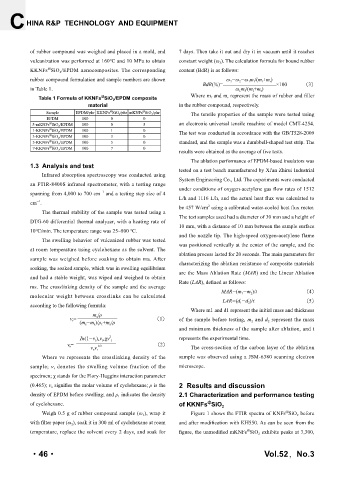
              Table 1 Formula of KKNFs SiO 2 /EPDM composite     Where m f  and m r  represent the mass of rubber and filler
                               material                      in the rubber compound, respectively.
                 Sample    EPDM/phr KKNFs SiO 2 /phr mKNFs SiO 2 /phr  The tensile properties of the sample were tested using
                                                 @
                                      @
                 EPDM        100      0          0
            5-mKNFs SiO 2 /EPDM  100  0          5           an electronic universal tensile machine of model CMT-4254.
                  @
            1-KKNFs SiO 2 /EPDM  100  1          0           The test was conducted in accordance with the GB/T528-2009
                  @
                  @
            3-KKNFs SiO 2 /EPDM  100  3          0
            5-KKNFs SiO 2 /EPDM  100  5          0           standard, and the sample was a dumbbell-shaped test strip. The
                  @
                  @
            7-KKNFs SiO 2 /EPDM  100  7          0
                                                             results were obtained as the average of five tests.
                                                                 The ablation performance of EPDM-based insulators was
           1.3  Analysis and test                            tested on a test bench manufactured by Xi'an Zhirui Industrial
               Infrared absorption spectroscopy was conducted using
                                                             System Engineering Co., Ltd. The experiments were conducted
           an FTIR-8400S infrared spectrometer, with a testing range   under conditions of oxygen-acetylene gas flow rates of 1512
                                   -1
           spanning from 4,000 to 700 cm  and a testing step size of 4
                                                             L/h and 1116 L/h, and the actual heat flux was calculated to
           cm .
             -1
                                                             be 457 W/cm  using a calibrated water-cooled heat flux meter.
                                                                       2
               The thermal stability of the sample was tested using a
                                                             The test samples used had a diameter of 30 mm and a height of
           DTG-60 differential thermal analyzer, with a heating rate of
           10℃/min. The temperature range was 25~800 ℃.      10 mm, with a distance of 10 mm between the sample surface
                                                             and the nozzle tip. The high-speed oxygen-acetylene flame
               The swelling behavior of vulcanized rubber was tested
                                                             was positioned vertically at the center of the sample, and the
           at room temperature using cyclohexane as the solvent. The   ablation process lasted for 20 seconds. The main parameters for
           sample was weighed before soaking to obtain ma. After
                                                             characterizing the ablation resistance of composite materials
           soaking, the soaked sample, which was in swelling equilibrium
                                                             are the Mass Ablation Rate (MAR) and the Linear Ablation
           and had a stable weight, was wiped and weighed to obtain   Rate (LAR), defined as follows:
           ms. The crosslinking density of the sample and the average
                                                                                        MAR=(m 1 -m 2 )/t                                    (4)
           molecular weight between crosslinks can be calculated
                                                                                         LAR=(d 1 -d 2 )/t                                        (5)
           according to the following formula:
                                                                 Where m1 and d1 represent the initial mass and thickness
                                m a /ρ
                                    ν r =                                (1)  of the sample before testing, m 2  and d 2  represent the mass
                            (m s -m a )/ρ 1 +m a /ρ
                                                             and minimum thickness of the sample after ablation, and t
                                      2                      represents the experimental time.
                            In(1-ν r ) + ν r+ χν r
                                  ν r =    1/3                                  (2)
                                ν o ν r                          The cross-section of the carbon layer of the ablation
               Where ve represents the crosslinking density of the   sample was observed using a JSM-6380 scanning electron
           sample; ν r  denotes the swelling volume fraction of the   microscope.
           specimen; χ stands for the Flory-Huggins interaction parameter
           (0.465); ν o  signifies the molar volume of cyclohexane; ρ is the   2  Results and discussion
           density of EPDM before swelling; and ρ 1  indicates the density   2.1 Characterization and performance testing
                                                                       @
           of cyclohexane.                                   of KKNFs SiO 2
                                                                                                 @
               Weigh 0.5 g of rubber compound sample (ω 1 ), wrap it   Figure 1 shows the FTIR spectra of KNFs SiO 2  before
           with filter paper (ω 2 ), soak it in 300 ml of cyclohexane at room   and after modification with KH550. As can be seen from the
                                                                                    @
           temperature, replace the solvent every 2 days, and soak for   figure, the unmodified mKNFs SiO 2  exhibits peaks at 3,300,


           ·46·                                                                           Vol.52,No.3

