


Page 37 - 《橡塑技术与装备》英文版2025年12月
P. 37
MACHINERY AND MOLD


                                Table 7  Threads                      (1) In CAM software such as ESPRIT, for settings with
                  Knife handle grip  Direction  Dextro-R  Levo-L  precision dimension requirements, use the mid-range value.
                      left       T28.01     > →       > ←
                      left       T28.02     > ←       > →         For those without precision dimensions, set it to 0.
                 Trapezoidal Thread      Metric Thread                (2) During the actual machining process, dimensions
                   Thread Pitch F  Thread Depth P  Thread Pitch F Thread Depth P
                       4          2.25       2         1.3        without tolerance and with lower requirements are taken.
                       5          2.75       3        1.95        After machining, the dimensions are measured, and the value
                       6           3.5
                    Trapezoidal thread: thread depth  P=0.5F+ac;   obtained by subtracting the measured dimensions from the
                P=1.5~5ac=0.25; P=6~12 ac=0.5; P=14~44 ac=1       programmed dimensions is compensated within the machine
                    Metric thread: thread depth P=0.65F.          tool. If there are precision requirements for the trial cutting
                10.3  Cooling system                              part, the CNC program should be modified or the trial cutting
                    High-pressure cooling involves increasing the pressure   should be performed after compensation within the machine
                of the cutting fluid to a specific level, allowing it to precisely   tool. After the trial cutting, wear compensation should be
                reach the cutting area through internal cutting fluid channels   performed, as shown in Figure 15.
                for rapid cooling. The use of high-pressure cooling for turning   (3) After processing the two ends, before processing the
                tools, U-drills, and gun drills can achieve good results, as   middle section, change the cutting blade and repeat the second
                shown in Table 8. Of course, tool materials such as ceramic   step.
                milling cutters and CBN are not suitable for using cutting fluid.
                    (1) In terms of cooling effect, high-pressure cooling
                technology involves precisely and quantitatively spraying
                coolant directly onto the cutting area of the blade using high
                pressure, thereby maximally removing heat from the cutting
                area and achieving rapid cooling.
                    (2) In terms of chip control ability, high-pressure cooling   Figure 15  Compensation Settings
                not only effectively reduces cutting heat but also increases   10.5   Processing site
                cutting brittleness, making it easier to break.
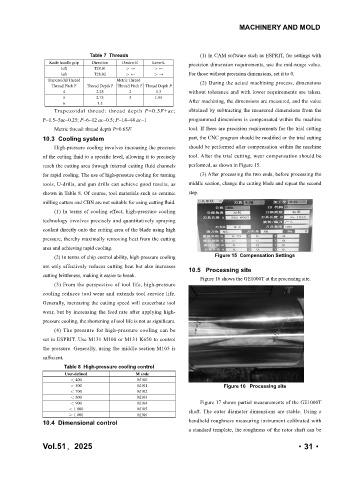
                                                                      Figure 16 shows the GE1000T at the processing site.
                    (3) From the perspective of tool life, high-pressure
                cooling reduces tool wear and extends tool service life.
                Generally, increasing the cutting speed will exacerbate tool
                wear, but by increasing the feed rate after applying high-
                pressure cooling, the shortening of tool life is not as significant.
                    (4) The pressure for high-pressure cooling can be
                set in ESPRIT. Use M131 M100 or M131 K650 to control
                the pressure. Generally, using the middle section M103 is
                sufficient.
                       Table 8  High-pressure cooling control
                       User-defined             M code
                         < 400                  M100
                         < 500                  M101                          Figure 16   Processing site
                         < 700                  M102
                         < 800                  M103
                         < 900                  M104                  Figure 17 shows partial measurements of the GE1000T
                         < 1 000                M105              shaft. The outer diameter dimensions are stable. Using a
                         ≥ 1 000                M106
                10.4  Dimensional control                         handheld roughness measuring instrument calibrated with
                                                                  a standard template, the roughness of the rotor shaft can be

                      年,2025
                Vol.51       51 卷                                                                      ·31·
                                                                                                       ·31·
                2025     第

