


Page 101 - 《橡塑技术与装备》英文版2026年3期
P. 101
PRODUCT AND DESIGN


              steel wire rope fixed on the output shaft, which is then wound   in Figure 4, and there are also designs where the diverter and
              and pulled to move the orientation stretching device forward   the bracket are integrated into a single structure, as shown in
              and backward. When the orientation stretching device moves   Figure 5. However, these structures are relatively bulky, time-
              forward, the steel wire rope is loosened by rotating the turbine   consuming and laborious to assemble and disassemble, and
              handle, and under the friction force generated between the tube   require relatively long heating and cooling times. In order to
              blank and the orientation stretching device, the orientation   save heating energy and assembly/disassembly time, reduce the
              stretching device is driven to move forward. When the   mass of the diverter cone, and accommodate the increased steel
              orientation stretching device moves backward, the direction   wire rope for storage, the diverter is designed to be hollow,
              of rotation of the turbine handle is opposite to that of the steel   as shown in Figure 6. A through hole is provided in the axial
              wire rope loosening, causing the steel wire rope to tighten and   diameter of the diverter cone's circular cone, and the output
              drive the orientation stretching device to move backward.  shaft of the turbine passes through the through hole provided
                                                                in the head connector and the diverter bracket 2's diverter rib.
                                                                The steel wire rope is then fixed with bolts. The outer diameter
                                                                of the diverter cone's circular cone is fitted into the inner hole
                                                                provided in the diverter cone bracket, and the diverter cone
                                                                is then connected to the hollow core rod through threads to
                                                                securely press the diverter bracket. The diverter 11 is designed
                                                                to be hollow, effectively storing the increased steel wire rope in
                                                                the hollow cavity, allowing the steel wire rope to smoothly pull
                                                                and guide the stretching device to move smoothly.
                                                                    There are three main dimensions in the design of the
                                                                diverter here: the divergence angle α, the length L of the
                                                                diverging cone, and the radius R of the top fillet of the diverter,
                                                                    (1)The selection of the diverter expansion angle α is
                                                                related to the viscosity of the plastic. For plastics with lower
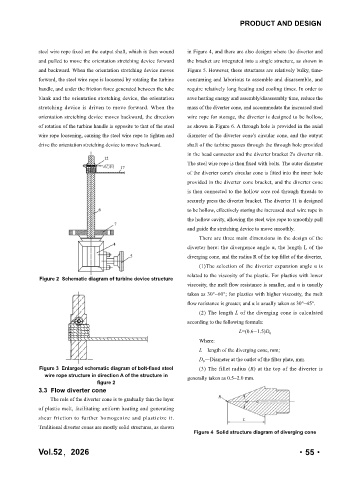
              Figure 2  Schematic diagram of turbine device structure
                                                                viscosity, the melt flow resistance is smaller, and α is usually
                                                                taken as 30°~60°; for plastics with higher viscosity, the melt
                                                                flow resistance is greater, and α is usually taken as 30°~45°.
                                                                    (2) The length L of the diverging cone is calculated
                                                                according to the following formula:

                                                                                  L=(0.6-1.5)D 0
                                                                    Where:
                                                                    L—length of the diverging cone, mm;
                                                                    D 0—Diameter at the outlet of the filter plate, mm.
              Figure 3  Enlarged schematic diagram of bolt-fixed steel   (3) The fillet radius (R) at the top of the diverter is
                wire rope structure in direction A of the structure in   generally taken as 0.5~2.0 mm.
                                  figure 2
              3.3  Flow diverter cone
                  The role of the diverter cone is to gradually thin the layer
              of plastic melt, facilitating uniform heating and generating
              shear friction to further homogenize and plasticize it.
              Traditional diverter cones are mostly solid structures, as shown
                                                                  Figure 4  Solid structure diagram of diverging cone


              Vol.52,2026                                                                            ·55·

