


Page 83 - 《橡塑技术与装备》英文版2026年3期
P. 83
PROCESS AND EQUIPMENTS


              apply vacuum, and turn on the heating device. Once the   Table 3 Orthogonal experiment test results
              temperature reaches 110℃, start timing and stir for 3.5 hours.   Experiment number Tensile strength / MPa  Extrusion rate / (mL·min⁻¹)
                                                                      1            2.65            25.4
              After the stirring time is up, let it stand and cool down. When   2  2.50            35.2
              the temperature returns to room temperature, the base material   3   2.30            52.6
                                                                      4            2.62            61.2
              is obtained.                                            5            2.51            66.4
                                                                      6            2.62            56.8
                  Add a certain amount of the aforementioned base     7            2.60            78.6
              material and color paste to the experimental power mixer, stir   8   2.63            68.2
                                                                      9            2.59            61.4
              for 5 minutes, and then add the crosslinking agent. Turn on the
              vacuum pump to evacuate the air and continue stirring for 20
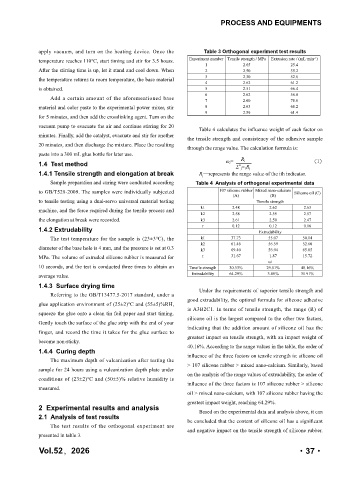
                                                                    Table 4 calculates the influence weight of each factor on
              minutes. Finally, add the catalyst, evacuate and stir for another
                                                                the tensile strength and consistency of the adhesive sample
              20 minutes, and then discharge the mixture. Place the resulting
                                                                through the range value. The calculation formula is:
              paste into a 300 mL glue bottle for later use.
              1.4  Test method                                                          ω i =  n  R i                                      (1)
                                                                                 Σ j = 1 R j
              1.4.1 Tensile strength and elongation at break        R j —represents the range value of the ith indicator.
                  Sample preparation and curing were conducted according   Table 4  Analysis of orthogonal experimental data
              to GB/T528-2009. The samples were individually subjected     107 silicone rubber Mixed nano-calcium   Silicone oil (C)
                                                                                (A)         (B)
              to tensile testing using a dual-servo universal material testing          Tensile strength
                                                                     k1        2.48         2.62       2.63
              machine, and the force required during the tensile process and
                                                                     k2        2.58         2.55       2.57
              the elongation at break were recorded.                 k3        2.61         2.50       2.47
                                                                                            0.12
              1.4.2 Extrudability                                    r         0.12     Extrudability  0.16
                  The test temperature for the sample is (23±3℃), the   k1     37.73        55.07      50.14
                                                                     k2        61.46        56.59      52.60
              diameter of the base hole is 4 mm, and the pressure is set at 0.3   k3  69.40   56.94    65.85
              MPa. The volume of extruded silicone rubber is measured for   r  31.67        1.87       15.72
                                                                                            ωi
              10 seconds, and the test is conducted three times to obtain an   Tensile strength  30.33%  29.51%  40.16%
              average value.                                      Extrudability  64.29%    3.80%      31.91%
              1.4.3  Surface drying time                            Under the requirements of superior tensile strength and
                  Referring to the GB/T13477.5-2017 standard, under a
              glue application environment of (25±2)℃ and (55±5)%RH,   good extrudability, the optimal formula for silicone adhesive
                                                                is A3B2C1. In terms of tensile strength, the range (R) of
              squeeze the glue onto a clean tin foil paper and start timing.
                                                                silicone oil is the largest compared to the other two factors,
              Gently touch the surface of the glue strip with the end of your
                                                                indicating that the addition amount of silicone oil has the
              finger, and record the time it takes for the glue surface to
                                                                greatest impact on tensile strength, with an impact weight of
              become non-sticky.
                                                                40.16%. According to the range values in the table, the order of
              1.4.4  Curing depth                               influence of the three factors on tensile strength is: silicone oil
                  The maximum depth of vulcanization after testing the
                                                                > 107 silicone rubber > mixed nano-calcium. Similarly, based
              sample for 24 hours using a vulcanization depth plate under
                                                                on the analysis of the range values of extrudability, the order of
              conditions of (23±2)℃ and (50±5)% relative humidity is
                                                                influence of the three factors is 107 silicone rubber > silicone
              measured.
                                                                oil > mixed nano-calcium, with 107 silicone rubber having the
                                                                greatest impact weight, reaching 64.29%.
              2  Experimental results and analysis                  Based on the experimental data and analysis above, it can
              2.1  Analysis of test results                     be concluded that the content of silicone oil has a significant
                  The test results of the orthogonal experiment are
                                                                and negative impact on the tensile strength of silicone rubber.
              presented in table 3.

              Vol.52,2026                                                                            ·37·

